
In recent years, converted industrial spaces have become one of the most striking trends in the world of corporate events. What was once the domain of alternative parties and creative productions is now a recurring choice for large companies for conferences, product launches, and corporate galas.
The reason is simple: these spaces offer something that conventional venues can hardly replicate — authenticity. An old factory or foundry has history, texture, and character of its own. It is not a neutral space, it is a setting with personality.
This article explores why this trend is here to stay and what the practical advantages are of choosing an industrial space for your next event.
The trend towards converted industrial spaces
The movement began in cities such as New York, London, and Berlin, where old warehouses and factories were transformed into cultural and event spaces. The industrial aesthetic — exposed brick, metal structures, high ceilings — became synonymous with contemporary style and urban sophistication.
In Lisbon, this trend has found fertile ground. The city has a vast industrial heritage from the 19th and 20th centuries that was abandoned or underused. Areas such as Marvila, Alcântara and Alfama have seen old foundries, port warehouses and workshops transformed into unique event spaces. For companies, this choice communicates something important: openness to innovation, appreciation for authenticity, rejection of the conventional. The space becomes part of the message.
Practical advantages of industrial spaces
Ceiling height and width
One of the most distinctive features of industrial spaces is their high ceilings — often 6, 8 or more metres high. This vertical amplitude completely transforms the experience. Participants feel they are in a grandiose but not oppressive environment. Art installations, large-scale scenography and lighting effects take on another dimension.
Total versatility
Industrial spaces are, by nature, open spaces. There are no rigid divisions, columns every few metres or predefined configurations. They are a blank canvas that can be adapted to virtually any format: central or side stage, round or long tables, networking zones or exhibition areas.
Natural scenery included
Exposed brick walls, wooden or metal beams, polished concrete floors — all these elements serve as natural decoration. Many events achieve a striking look with minimal intervention, saving significantly on set design and decoration.
Memorable contrast
The contrast between the raw materiality of the space and the sophistication of the event creates lasting memories. A gala dinner with elegant tables in an old warehouse; a cutting-edge technology launch in a century-old foundry — these unexpected combinations remain in the memory of participants.


Types of events ideal for industrial spaces
Not all events benefit equally from an industrial setting. Some formats, however, take on a whole new dimension:
Product launches
The contrast between cutting-edge technology and historic architecture creates interesting visual tension. The product stands out against a backdrop with texture and history, rather than getting lost in a generic space.
Conferences and conventions
The spaciousness allows for creative configurations that go beyond the traditional auditorium format. Breakout zones, networking areas, and exhibition spaces can coexist in the same environment.
Company galas and dinners
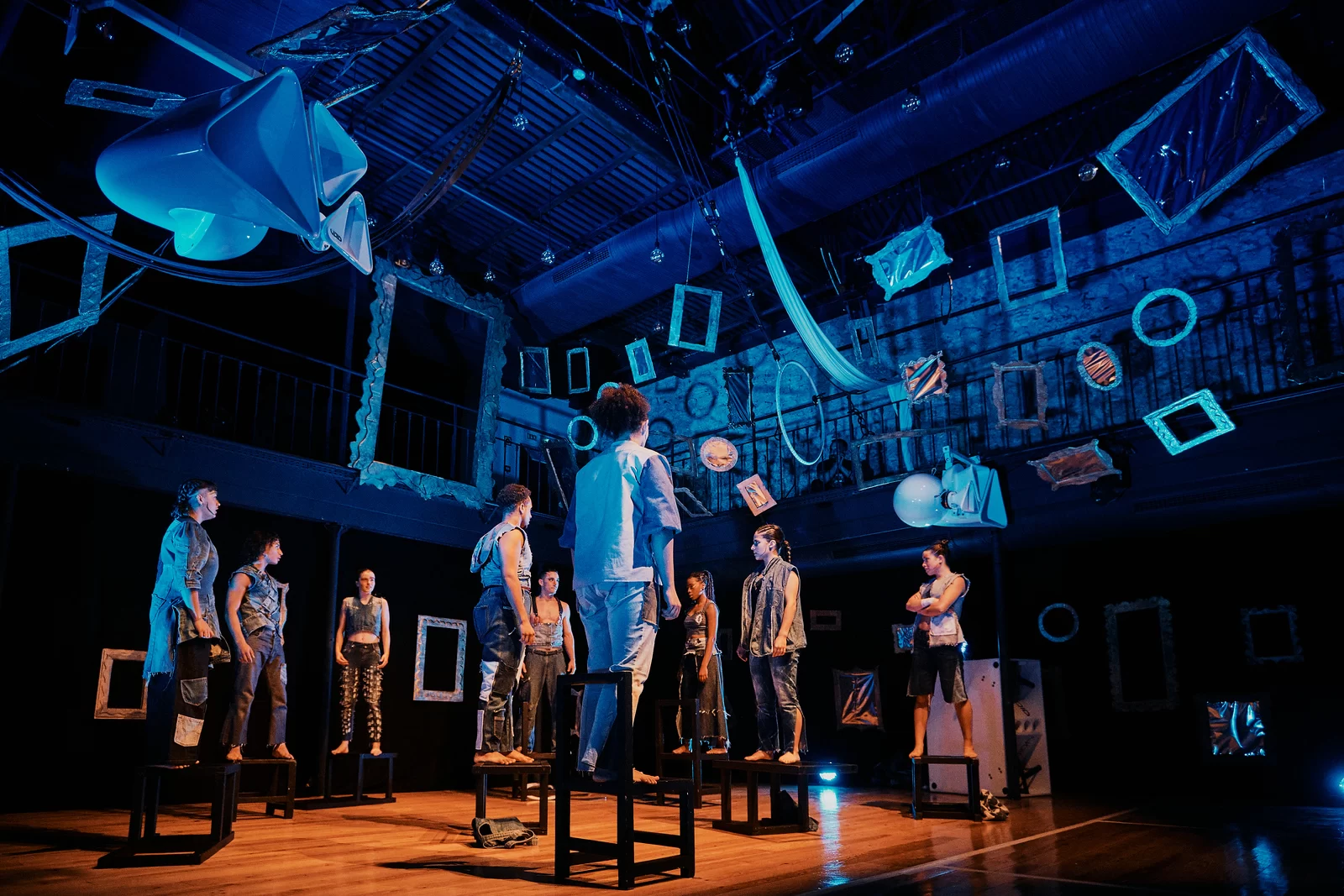
Scenic lighting in industrial spaces creates dramatic and sophisticated environments. The ceiling height allows for suspended installations that completely transform the perception of space.
Brand events and activations
The versatility of the space allows for the creation of immersive brand experiences. Each zone can tell a different part of the story, and the raw environment serves as the perfect canvas for creative branding.
The storytelling of space: history as value
An industrial space with history brings more than square metres — it brings narrative. Knowing that you are in a former foundry where metal was forged 150 years ago, or in a warehouse that supplied ships on the Tagus River, adds a layer of meaning that spaces built from scratch cannot offer. This history can be incorporated into the event’s communication. The invitation can mention the origin of the space. The welcome presentation can contextualise the location. Participants leave not only with memories of an event, but of a place.
For brands that value authenticity and heritage, this storytelling is particularly relevant. Organising an event in a space with a century and a half of history communicates values without needing to verbalise them.
Practical considerations
Industrial spaces have their own characteristics that must be considered in planning: Acoustics
Hard materials (concrete, metal, brick) can create reverberation. Professional spaces have sound systems calibrated to compensate for this. At Suspenso Concept Venue in Lisbon, the entire structure of the old factory underwent acoustic treatment, an ambitious project carried out by the company Jocavi, which transformed the acoustics of a factory into those of a recording studio.
Air conditioning
High ceilings can make it difficult to heat in winter or cool in summer. Ensure that the HVAC system is adequate for the expected number of people. At Suspenso, the main room is fully air-conditioned and also has a ventilation/extraction system that maintains constant air circulation.
Technical infrastructure
Not all industrial spaces are professionally equipped. Check whether audiovisual equipment, electrical power and lighting are included or need to be hired. Spaces that have a wide range of audiovisual equipment installed end up offering added value in terms of cost and set-up because they are plug and play.
Example: Suspended, the old foundry in Alfama
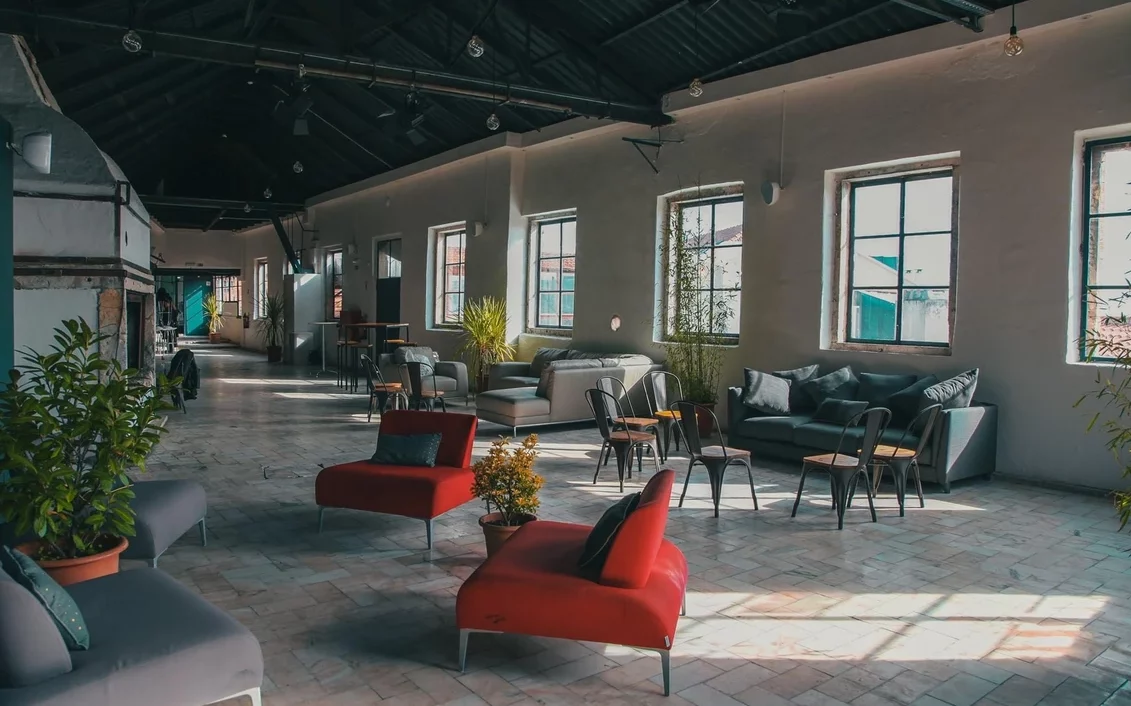
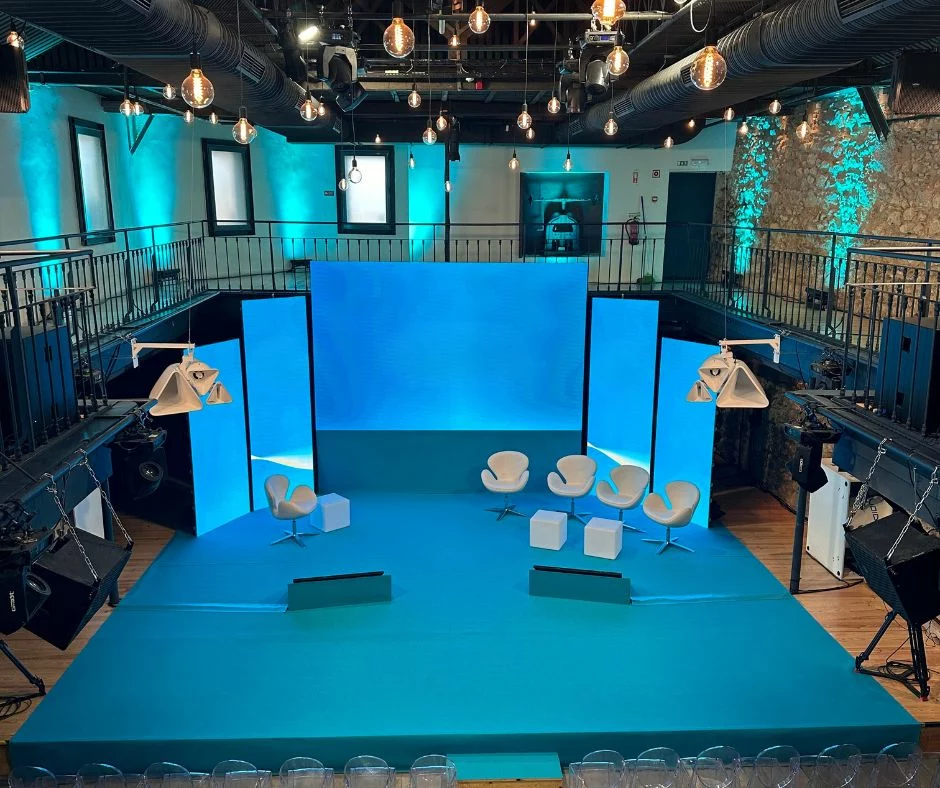
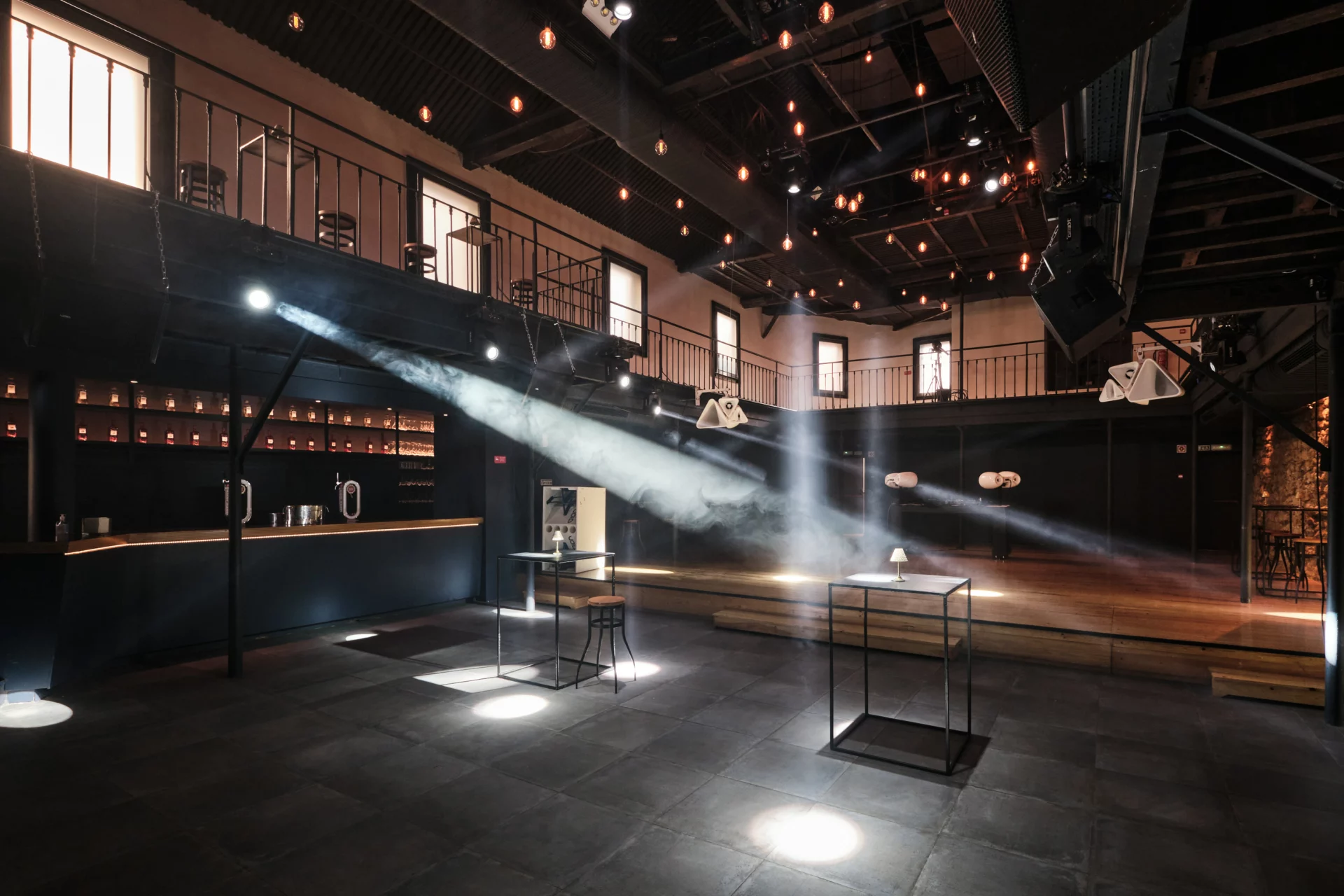
In the heart of historic Lisbon, a 19th-century foundry has been transformed into one of the city’s most distinctive venues. The space has retained its original architectural features — wooden beams, metal structures, stone walls — while being equipped with all the technical infrastructure of a modern event space.
With 900m² of interior space distributed across three separate rooms, plus a 240m² rooftop with views over the city (in another location in the city), the space can host everything from conferences for 400 people to intimate dinners for 50. The combination of industrial history with a central location and technical versatility represents well the potential of this type of venue.
R. de Santiago 19, in Alfama, has become the venue for dozens of corporate events seeking exactly this: a space with soul, not just walls.
A trend with substance
Industrial spaces are not just an aesthetic trend. They offer real practical advantages — versatility, spaciousness, natural surroundings — combined with an intangible but important value: authenticity and history.
For companies that want their events to convey innovation without artificiality, tradition without rigidity, sophistication without pretension, a converted industrial space may be exactly the answer.
The choice of venue is always a statement. Choosing a space with history is declaring that history matters.
Discover a 19th-century foundry in Alfama
Suspenso is an industrial space with all modern technical infrastructure. 900m² interior. Original beams, 8m high ceilings, history dating back to 1837.